How to Launch Your Online Course in 2025: What Every Beauty Educator Needs to Know About Repetition, Responsibility, and Program Promises
You've launched something. You've talked about it a few times. And then... it's crickets.
I've been there. So has nearly every educator I've ever worked with. And here's what I've learned: the course creators who actually build real, scalable education businesses aren't the ones with the biggest audiences or the best ideas. They're the ones willing to test, adjust, and take responsibility without making it mean anything about them.
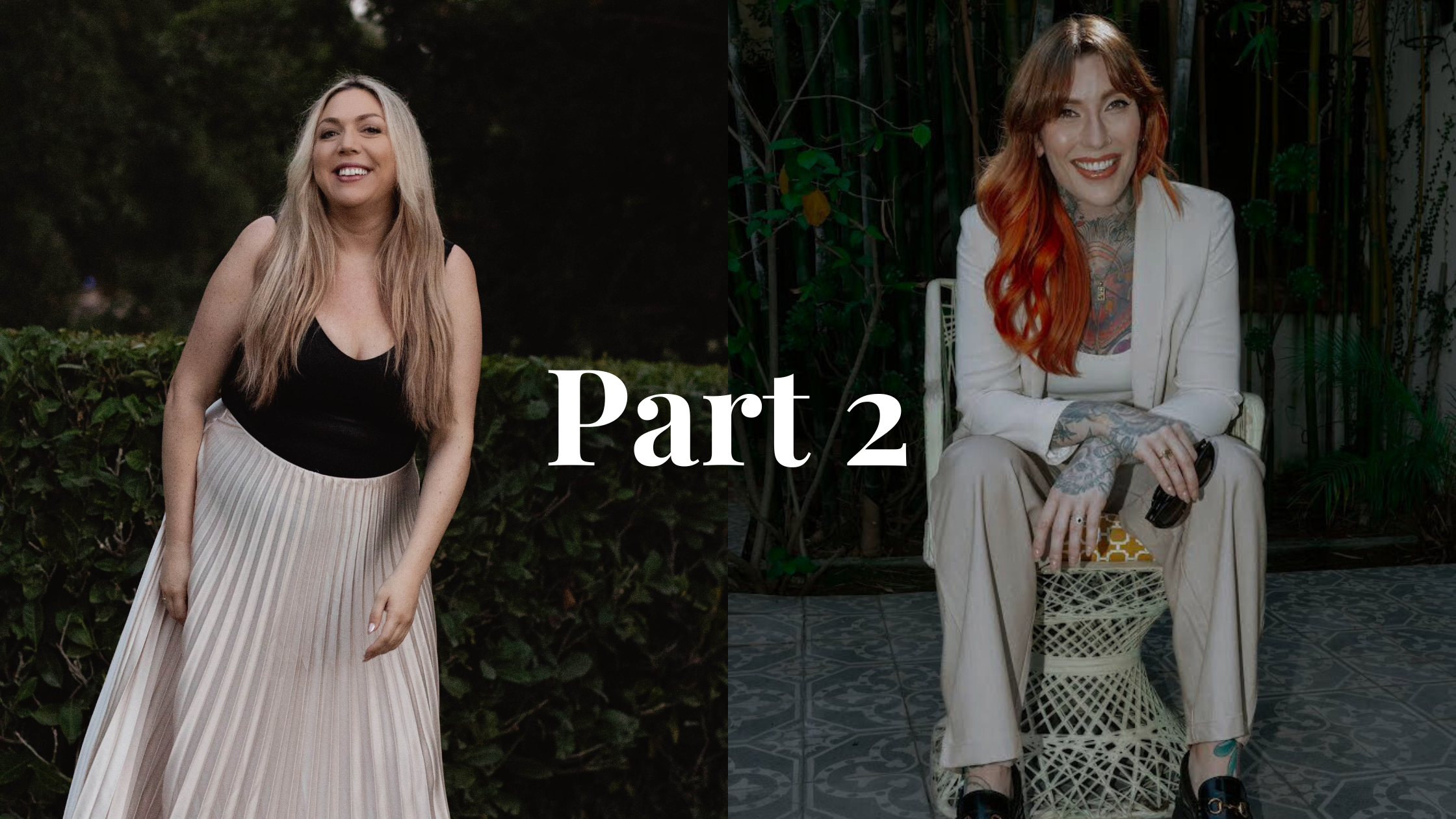
I recently sat down with Maddi Cook from Boss Here Salon to talk about what that actually looks like. Maddie helped one educator bring in £150,000 on her first digital course launch. She's since helped dozens of beauty pros get their online education off the ground. And what she shared about repetition, experimentation, and getting specific? I'll die on this hill: every educator needs to hear it.
What's the Best Way to Launch Your First Online Course?
Off the hop, Maddi and I agree on this: teach live first if you can.
Not because it's easier. It's actually harder. But the feedback you get is everything.
"It's a real skill to teach live," Maddi explained. "If you want to do retreats, podcasts, panels... you have to get okay with talking about your topic. And the live feedback is incredibly important because without it, we don't make it better."
Here's what that looked like for her. Her first big win was a pricing calculator and course for hairstylists. But the very first version? A £29 Google sheet.
"I just needed to know, does this work? Can people get a result?" she said. She tested it with a small group. Got questions. Saw where it didn't make sense. Made edits fast.
Then she did a live webinar to sell the course. And she did that webinar again. And again.
150 times.
"Insane. I don't recommend anyone do that. But it was lockdown, I loved doing it." What it built was a foundation so solid she could answer any question anyone could possibly ask about pricing. That's why she can now speak anywhere, do any podcast, consult with huge brands. All from something she started in April 2020.
How Many Times Do You Need to Talk About Your Offer?
More than you think. Way more.
Maddi shared a launch where she'd posted about a membership 246 times across platforms. She made a post saying "You're not Beyoncé. None of us have earned the right to drop an album tomorrow and have it go platinum."
And people STILL messaged her saying they missed it.
I've experienced this too. One launch I sent 12 emails during a seven day open cart. Felt like so much. And then a dozen people reached out after saying they had no idea it was happening.
If you're not sick of what you're saying, you're not saying it enough.
And if it's not working? Don't just post the same thing over and over. Try 10 different angles and see which one resonates. Be a scientist about it.
Here's the other thing Maddie called out: we conflate thinking about things with trying.
"When people say they're really trying, I ask what are you doing? What have we posted? What emails are we sending?" she said. "And they'll say they've just been thinking about it. Okay, well our audience isn't telepathic yet.
What Do You Do When Your Course Launch Flops?
One of my clients had a launch that didn't hit the numbers she wanted. We looked at the data, found the issue, fixed it, and she enrolled 12 new students shortly after.
What I see happen with a lot of people instead? Pity spiral. Shame spiral. No action for six months.
Developing the resilience to say "that didn't work, what can I learn, move on" is everything for course creators.
Maddi brought up a framework she's talked about before. Some people love it. Others have said it triggered them and they had to unfollow.
Fault versus responsibility.
"It's not your fault how the economy is. There's a lot that's not our fault. But it IS our responsibility how we navigate through those things."
She notices language too. When beauty pros post "Is anyone else quiet?" she asks: what do you actually gain from that question besides momentary solidarity?
The better question? Who's busy? How did you get busy?
The educators who take responsibility move faster. Full stop.
What Should You Sell as a Course Creator in 2026?
Here's something I feel strongly about: we're competing with ChatGPT now for information. Anyone can get information.
What sells is your perspective. Your lived experience. Your hills to die on. How YOU teach something.
"We can't just get away with 'you'll have clarity, confidence, and whatever,'" Maddi said. "That doesn't work anymore. We have to be so specific. And we can only understand that specificity by listening to people and paying close attention."
She gets content ideas from conversations. Someone voice notes her and says "those are my bread and butter clients" and she thinks YES, that's the exact language. Then she makes a post about it.
Pay attention to how your people talk about their problems. That's your marketing.
There's room for everyone to teach marketing or pricing or extensions or colour. But it has to be YOUR way. Not ChatGPT's way.
How Do You Create a Program Promise That Sells?
This might be my favourite part of our conversation.
Maddi's program promise: "I help hairstylists drop a day behind the chair."
Specific. Measurable. Clear.
She got there by getting brutal. She had a previous program that became a kitchen sink. Everything was in it. Great content, but she couldn't market it.
So she got out Post-It notes. Wrote every piece of curriculum on one. Put them on her dining table.
Then she asked one question: "If this wouldn't help a fully booked person drop a day without sacrificing profits, it has to go."
She cut it down to six things. Six weeks of curriculum.
And she sold out a £4,500 program with a Google Doc, an unlisted YouTube video, and a Google form. No sales page.
"It was the strength of the program promise. That's the shop front of your offer. That's what other people tell other people about you."
Give people the language to recommend you. Then repeat it until you're bored. It works.
What This Means for Your Education Business
If you're building online courses as a hairstylist, beauty educator, or anyone in this industry, here's what I want you to take from this:
Teach live first. The data will make your marketing and your curriculum better.
Repeat yourself more. If you're not bored of it, you haven't said it enough.
Be a scientist. When something doesn't work, look at the data. Try something different. Don't make it mean anything about you.
Lead with perspective. Information is free. YOUR way of teaching it isn't.
Get specific with your promise. What's the measurable result? Cut everything else.
If this post gave you an idea or a new perspective, send me a DM on Instagram @itsJodiebrown. I'd love to hear your thoughts.
And if you’d like to listen in on the exact podcast episode that accompanies this blog post, you can do that here, or wherever you get your podcasts.
Xo Jodie
For the full conversation with Maddi, including more on her Instagram strategy and how she's approaching launches differently in 2025, tune into the Sought After Educator podcast episode. You'll get the complete story behind her £150,000 launch and hear us nerd out on everything we didn't have time to cover here.
Follow Maddi on Instagram @maddicookcoaching