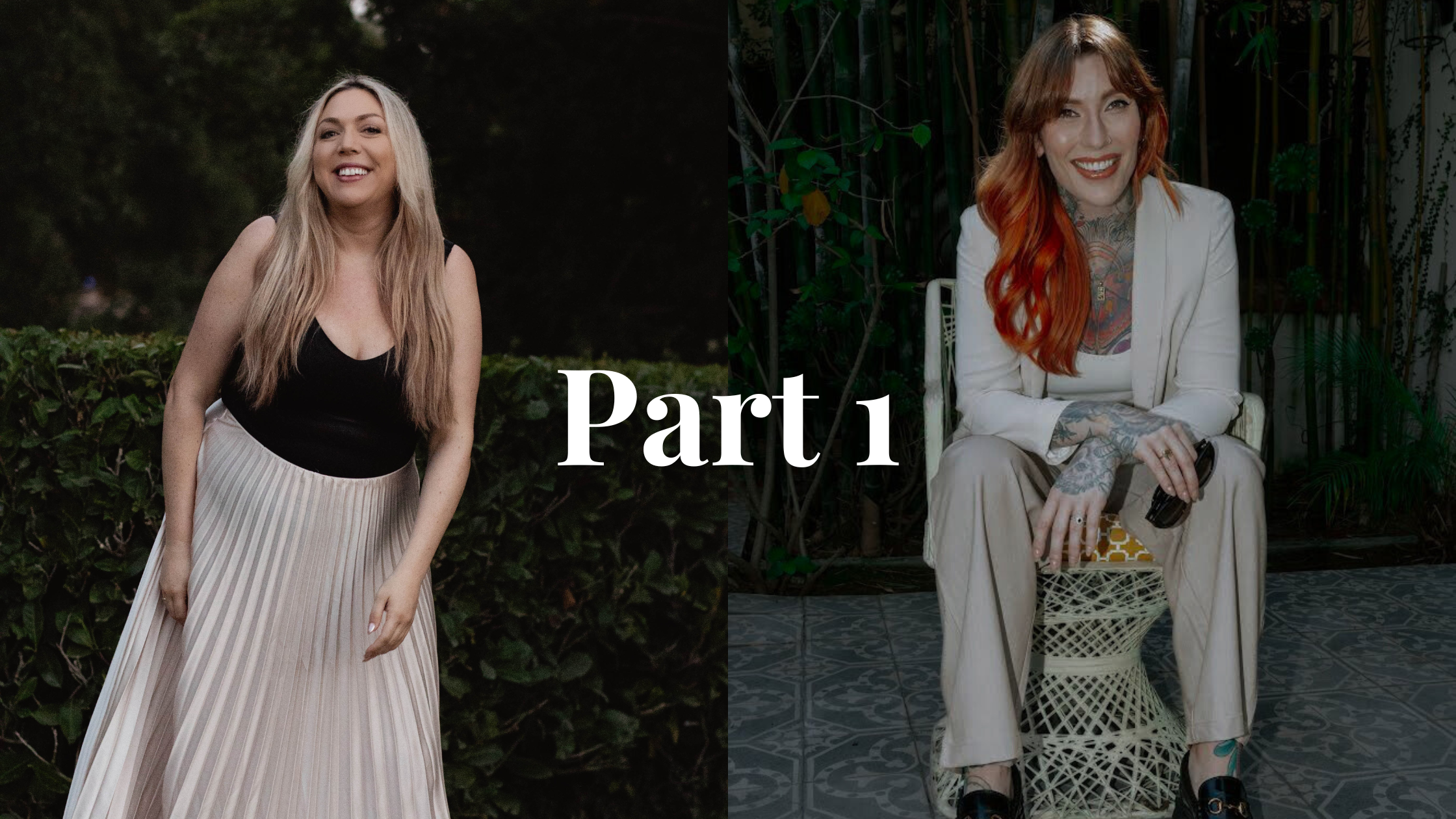
If you've been feeling that nudge lately, the one that whispers I love doing hair, but I also want more, you're not alone. And honestly? That feeling might be pointing you toward something really good.
I sat down with Maddi Cook for this conversation, and if you don't know her yet, she went from working class hairstylist to world class educator. She's helped beauty pros build additional income streams through online education, and the way she talks about it is so grounded. It's a real relief compared to the "become a seven figure boss babe overnight" noise out there.
What I love about Maddi's approach is that she doesn't make you feel like you need to quit your job, become super techie, or create a 47 module course before you're allowed to call yourself an educator. She keeps it real.
What You'll Learn
How to validate your course idea before wasting time and money building it
Why micro, specific offers are winning right now (with real examples)
How to pre-sell something before it even exists without feeling like a scammer
The exact tech you actually need to get started (spoiler: it's way less than you think)
How to build your education business as a side hustle without burning out
The mindset shift that has to happen when you go from confident service provider to visible educator
Why Does Maddi's Story Matter for Beauty Educators?
Maddi's path into education wasn't some strategic master plan. She started doing hair at 20, fell in love with extensions, and kept getting asked the same questions in industry Facebook groups. Out of what she calls "laziness to efficiency," she started a group to answer everyone at once.
She was making about 200 pounds a month from a VIP group she'd priced at 50 pounds (which, looking back, she laughs about). Then lockdown hit. She asked one question in her group: "Does anyone want a hand with their pricing?"
About a hundred people said yes.
She already had a pricing calculator she'd built for herself. She packaged it up, shared it, and that one move changed everything. Her life, her husband's life (he's worked with her since 2020), and the lives of thousands of students.
The thing is, she thought she'd do hair forever. She literally thought she'd "drop down dead behind the chair." Sound familiar?
What Would You Do Differently If You Started an Education Business in 2025?
This is something I asked Maddi directly, and her answer is gold for anyone thinking about getting into course creation.
Before she got into online education, she spent four years writing a manual to teach extensions. Four years of messing with it, rewriting it, procrastinating because she was nervous about putting it out there. Then she taught it twice and realized she hated it.
It was still location dependent. She still had to go to her salon on her days off. She still had to find models for students. It was the same job, just dressed differently.
Her advice now? Get crystal clear on lifestyle design first. Ask yourself:
Do I want location independence?
Do I want something scalable?
How does this need to fit into my actual life?
Don't build something that's the same but different to your hair business. If you want freedom, build something that actually gives you freedom.
How Do You Know If Your Course Idea Will Actually Sell?
This is where so many people get stuck. They spend months (or years) building something, hire videographers, set up all the tech, and then... it's crickets.
Maddi's first step? Validate the idea before anything else.
The way she teaches it is through pre-selling. Yes, you can sell something before it technically exists. And no, it doesn't make you a scammer.
Here's why this works: if you're a new educator and people don't know you yet, you can't just show up and assume you know exactly what the market wants. You need proof. Pre-selling gives you that proof before you've invested all your time and energy.
One of Maddi's students launched a course that's literally just for aesthetic practitioners in Wales to pass a specific licensing exam. Not the full UK. Just Wales. One exam.
Because it's so specific, she can speak directly to her person. It's immediately clear if you're her ideal student or not. And she has a 100% success rate because the transformation is so focused.
If she'd started with "I'm gonna teach everything about aesthetics," it probably wouldn't have worked. But because she niched down hard, her students get results. Then they come back asking, "What else have you got?"
What Tech Do You Actually Need to Launch a Course?
This is where people overcomplicate things so badly.
Maddi shared a story about one of her students who teaches intimate waxing. This woman launched her entire course on her phone. She hasn't opened a laptop in 20 years. The only "high tech" part was paying someone to come in and film videos.
Her course lives on Google Drive. She has a sales page but barely uses it. She just chats in the DMs, sends a payment link, and delivers the course. That's it.
What you actually need:
A way to take payment (PayPal, Stripe, whatever)
A way to deliver the content (Google Drive, Zoom, a simple course platform)
Something on your calendar
That's the baseline. You don't need funnels, automations, and fancy sales pages to start. You can add all that later once you've validated that people actually want what you're offering.
How Do You Start If You're Not Ready to Quit Your Job?
Most of the educators Maddi works with are building this as a side hustle. Nobody she knows just woke up one day and said "I'm gonna jump and hope the net appears."
She actually has a program that helps fully booked stylists drop a day of client work without losing any profit. So they free up a Wednesday, make the same money, and now have dedicated time to build their education business without their nervous system going haywire over bills.
The people who do really well? They treat their education work the same way they treat client work. They ring fence the time. They don't see it as "I'll do it when I feel like it." They make choices like skipping Netflix to spend an hour on their course because they see the long game.
This is not an overnight success story. Anyone selling you templates that promise you'll be a seven figure boss babe tomorrow? Run in the opposite direction.
What's the Hardest Mindset Shift for New Educators?
There are a few that came up in our conversation:
1. Going from "I do work, I get paid" to delayed gratification
Behind the chair, you finish with a client and get paid immediately. With education, you might put in months of work before you see a payoff. That's a hard adjustment, especially for neurodiverse folks who need that dopamine closed loop.
2. Losing the constant external validation
Hairstylists get told how amazing they are five times a day. Starting an education business? Sometimes nobody tells you you're doing a good job. Ever. You have to learn to hype yourself up before any evidence exists to validate you.
3. Being okay with failure as data
Maddi says she stands on a "freaking mountain of failures." Her museum of failures is huge. But she doesn't attach meaning to it. She sees everything as data. And honestly, no one is paying as much attention to your stumbles as you think they are.
As she put it: "Don't take the opinions of people whose life you wouldn't trade."
Digital Courses vs. AI: Are Online Courses Dead in 2025?
I've heard people say they were going to create a course, but then they heard digital courses are dead because of ChatGPT.
They're not dead.
Here's the thing: if you make a course using ChatGPT to write everything, you are copyable. Your student could find that same information themselves. But your lived experience? Your specific perspective and the way you teach? That can't be replicated.
The demand for digital education keeps rising as more people get comfortable learning online. What's changed is that people are drowning in information. They're not looking for more content. They're looking for someone who can help them cut through the noise and get a specific result.
That's where your micro, specific offer wins.
How to Apply This to Your Business
Step 1: Get clear on lifestyle design What do you actually want? Location independence? Scalability? Time freedom? Design your offer around that.
Step 2: Pick one specific transformation Not everything you know. One result you can help someone achieve.
Step 3: Validate before you build Pre-sell it. Offer a small live version to a handful of people. Get proof that the market wants it.
Step 4: Start lean and live Do it on Zoom. Use Google Drive. Chat in the DMs. Make it exist first, then make it good.
Step 5: Treat it like a real job Ring fence the time. Show up consistently. Play the long game.
Key Takeaways
You don't need to know everything to start teaching. You need to know one thing really well.
Validate first, build second. Pre-selling protects you from wasting time on something nobody wants.
Micro offers win. The more specific your transformation, the easier it is to sell and deliver results.
You don't need fancy tech. Payment link + delivery method + calendar. That's enough to start.
Build it as a side hustle. Don't quit your job from a place of financial desperation.
Failure is data. Successful educators have massive piles of failures. They just kept going.
Love the work. You're going to talk about this topic thousands of times. Make sure it's something you actually care about.
If this post gave you an idea or a new perspective, send me a DM on Instagram @itsJodiebrown. I'd love to hear your thoughts.
And if you’d like to listen in on the exact podcast episode that accompanies this blog post, you can do that here, or wherever you get your podcasts.
Xo Jodie
Ps. Don't forget to subscribe to the Sought After Educator Podcast to get more insights like this delivered to your phone every wee
Follow Maddi on Instagram @maddicookcoaching